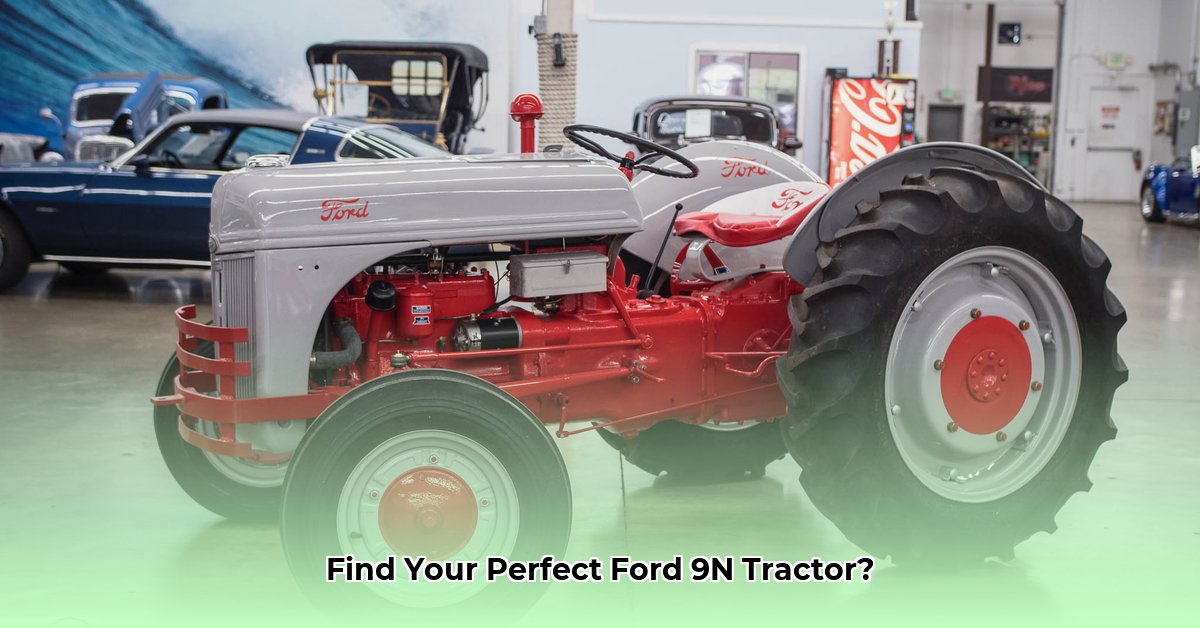
The Ford 9N tractor—a legend forged in the late 1930s—continues to captivate collectors and working farmers alike. Its innovative three-point hitch system revolutionized agriculture, and its relatively high production numbers ensure a vibrant market today. However, this very popularity results in a wide price range, making informed decision-making crucial. For more detailed specifications, check out this useful resource. This guide provides a comprehensive market analysis and actionable intelligence to help you navigate the world of Ford 9N tractors.
The Enduring Appeal of the Ford 9N
The Ford 9N, produced from 1939 to 1947, wasn't simply a machine; it symbolized progress. Its innovative three-point hitch system significantly improved efficiency, and production numbers nearing 100,000 ensured widespread adoption, leaving a substantial legacy for today's collectors and farmers. This abundance, however, contributes to a diverse price spectrum—ranging from under $1,000 to well over $13,000. But what exactly drives prices such as these?
Factors Affecting Ford 9N Tractor Values
Numerous factors influence the value of a Ford 9N, extending beyond mere age. Consider it akin to a classic car; a meticulously restored masterpiece will fetch significantly more than a project in need of extensive work.
Condition: A tractor's condition is paramount. A fully restored example will command a premium compared to one needing a significant overhaul. Rust, missing parts and mechanical issues all influence value.
Originality: Collectors highly value originality. A 9N retaining its original engine, transmission, and other components will usually sell for more than one fitted with replacement parts, regardless of quality.
Completeness: The presence of all original parts, including implements, tools, and manuals, significantly enhances value. A complete tractor with proper documentation is much more desirable.
Documentation: Service records, ownership history, and other supporting documentation act as a detailed provenance record for this classic machine, adding to a tractor's desirability and thereby its value.
Year of Manufacture: Early production models are often sought after due to their rarity, commanding higher prices than later models.
Restoration Quality: A professional restoration significantly boosts value, while a poor restoration can drastically reduce it.
Analyzing the Ford 9N Market: Price Trends
The Ford 9N's value follows a spectrum. At one end, meticulously restored tractors, complete with gleaming paint, perfect mechanics, and extensive documentation, command top prices. At the opposite end are restoration projects—tractors needing extensive repair, often more affordable but requiring significant time and investment. The middle ground encompasses tractors in varying states of repair, with prices reflecting their respective condition and completeness. This underscores the crucial importance of a pre-purchase inspection. Isn't it remarkable how a machine's history and condition so greatly impact its worth?
Navigating the Market: Actionable Steps
Whether you're buying, selling, or supplying parts, careful planning is essential. The following steps offer a framework for navigating this market effectively.
For Buyers:
Thorough Research: Explore online forums, auction sites, and specialized resources to understand current market values based on condition and features.
Establish a Budget: Set a realistic budget before you start searching to help avoid impulsive purchases.
Comprehensive Inspection: Before buying, hire a qualified mechanic specializing in vintage tractors to conduct a thorough inspection. This can reveal hidden problems and save you significant future costs.
Strategic Negotiation: Research comparable recent sales to use as leverage when negotiating the price. Walking away from an unreasonable deal is always an option.
For Sellers:
Meticulous Documentation: Compile all available information regarding your tractor, including service history, photos, and any pertinent information about previous owners.
Honest Pricing: Research comparable tractors sold recently to establish a competitive price range.
Professional Presentation: Use high-quality photos showcasing the tractor's strengths and weaknesses equally. A well-written description is crucial.
Transparency: Be completely upfront about any known issues or needed repairs.
For Parts Suppliers: The demand for Ford 9N parts continues to support a robust market, making it an attractive space for parts providers. Identifying and sourcing rare parts requires diligent efforts, networking, and potentially reproduction of parts, based on their availability.
Risk Assessment: Protecting Your Investment
Buying or selling a vintage tractor inherently carries risks. A thorough understanding of these risks enables informed decision-making.
| Risk Factor | Likelihood | Impact | Mitigation |
|---|---|---|---|
| Overpaying for a tractor | High | Significant financial loss | Thorough research and pre-purchase inspection |
| Parts Unavailability | Medium | Project delays, increased costs | Strong supplier relationships, consider part reproduction |
| Restoration Cost Overruns | Medium | Exceeding budget | Detailed planning, multiple quotes for restoration work |
| Mechanical Failure | Medium | Unexpected expenses, downtime | Regular preventative maintenance, access to a skilled mechanic |
Conclusion
The Ford 9N market presents a unique blend of historical significance and mechanical intricacies. By employing the steps outlined in this guide and exercising due diligence, buyers, sellers and parts suppliers can confidently navigate this fascinating area and achieve their goals. The Ford 9N remains a testament to agricultural engineering, and its ongoing appeal ensures a lively and rewarding market for enthusiasts and professionals alike.